The Chemistry of Rapport: How Understanding Brain Science Transforms Companionship Into an Unforgettable Art
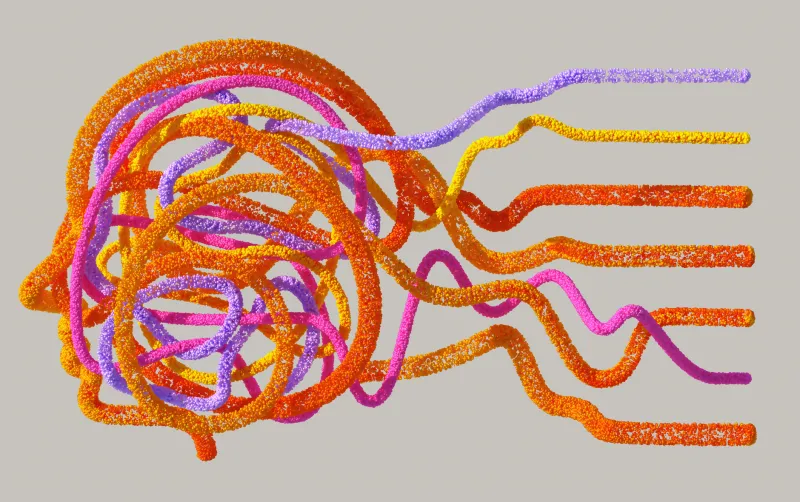
There is a moment in certain engagements — subtle, almost imperceptible — when conversation ceases to feel like an exchange and begins to feel like recognition. Something shifts. The client leans slightly forward. The pace of speech slows. A quiet ease settles into the room. What has occurred is not accidental, nor is it the product of mere personality. It is, at its foundation, a neurochemical event — one that the most accomplished companions learn to facilitate with consistency and intention.
For professionals operating at the premium tier of the companionship industry, understanding the science beneath the surface is not an academic exercise. It is a practical framework for delivering experiences that clients return to, remember vividly, and speak of with genuine enthusiasm. Elite companionship, when practiced with this awareness, becomes something far more sophisticated than social grace — it becomes a calibrated engagement with the human brain itself.
Dopamine and the Architecture of Anticipation
Dopamine is frequently described as the brain's pleasure chemical, but this characterization is incomplete. More precisely, dopamine governs anticipation, reward, and the motivation to seek. It surges not only when something pleasurable occurs, but in the moments before — during the buildup, the expectation, the sense that something meaningful is about to unfold.
For a companion who understands this, the implications are significant. The manner in which an engagement is framed before it begins — through thoughtful communication, considered presentation, and carefully managed availability — already begins shaping the client's neurochemical experience. When a client anticipates an encounter with genuine excitement, dopamine has already been activated. The companion who cultivates this anticipatory state is working with the brain's reward architecture rather than simply hoping to satisfy it after the fact.
This is why the most in-demand professionals rarely rush the pre-engagement phase. The deliberate pacing of communication, the strategic withholding of certain details, and the cultivation of curiosity are not affectations — they are neurologically informed practices that elevate the experience before it formally begins.
Oxytocin and the Neuroscience of Trust
If dopamine governs the pursuit of pleasure, oxytocin governs the experience of belonging. Often called the bonding hormone, oxytocin is released during moments of genuine eye contact, attentive listening, physical warmth, and emotional synchrony. It is the chemical substrate of trust — and in a professional context, trust is the single most valuable currency a companion can accumulate.
Clients who feel genuinely seen and understood — whose words are received without judgment, whose preferences are remembered without prompting, and whose emotional states are met with authentic responsiveness — experience measurable oxytocin release. This is not a metaphor. It is biology. And it explains why certain companions inspire a loyalty that seems disproportionate to the time spent together.
The professional who studies this understands that small gestures carry enormous neurochemical weight. Remembering the name of a client's preferred beverage. Noting a detail mentioned weeks prior and referencing it naturally. Maintaining genuine eye contact during meaningful conversation. These are not merely courteous behaviors — they are oxytocin triggers that build the neurological foundation of lasting rapport.
Mirroring: The Body's Language of Alignment
Neuroscience has established that human beings possess mirror neurons — cells that fire both when we perform an action and when we observe another performing the same action. This system is the biological basis of empathy, and it operates continuously in social interaction, largely beneath conscious awareness.
When a companion subtly mirrors a client's posture, speech rhythm, or emotional tone, the client's brain interprets this alignment as evidence of shared understanding. The effect is profound: the client feels less alone, more understood, and more at ease. Skilled mirroring does not involve imitation — it involves calibration. The companion who listens closely enough to match the cadence of a conversation, who adjusts energy levels in response to the client's mood, and who reflects emotional states without amplifying or diminishing them, is practicing one of the most sophisticated forms of human attunement available.
In American social culture, where many individuals navigate daily life within environments that feel impersonal or transactional, this quality of presence is genuinely rare. A companion who offers it occupies an entirely different category in the client's experience — not merely enjoyable, but restorative.
Emotional Attunement as Professional Mastery
Attunement is distinct from empathy, though the two are related. Empathy involves understanding another's emotional state; attunement involves responding to it in real time, with precision. It is the difference between acknowledging that a client seems distracted and knowing, without being told, that what is needed in this moment is lightness rather than depth — or stillness rather than stimulation.
This capacity is trainable. It develops through deliberate observation, through studying the micro-expressions and tonal shifts that precede verbal communication, and through the discipline of placing the client's experience at the center of one's awareness throughout an engagement. Companions who cultivate attunement report that their work becomes both more fulfilling and more effective — clients respond more openly, engagements feel more natural, and the emotional residue of an encounter is one of genuine satisfaction rather than performance.
The neuroscience supports this observation. When two individuals achieve high levels of attunement, their neural activity begins to synchronize — a phenomenon researchers call neural coupling. In this state, communication becomes remarkably efficient, misunderstandings decrease, and the subjective sense of connection intensifies dramatically. For a companion, facilitating this state is the pinnacle of professional skill.
Translating Science Into Practice
Understanding the neurochemistry of connection is only valuable insofar as it informs behavior. The practical applications are both numerous and accessible. Slowing down the pace of initial interaction allows the nervous system to settle and trust to begin forming. Asking questions that invite genuine reflection — rather than questions that merely fill silence — stimulates the kind of mental engagement associated with dopamine release. Maintaining physical presence without distraction signals to the brain that this individual, in this moment, is the sole priority.
Furthermore, the manner in which an engagement concludes shapes neurochemical memory. Research on what psychologists call the peak-end rule suggests that human beings remember experiences primarily through their most intense moment and their final moment. A companion who is deliberate about how an engagement closes — ensuring warmth, unhurriedness, and a sense of genuine completion — is literally shaping how the experience will be remembered long after it has ended.
The Informed Companion's Advantage
Premium companionship has always been, at its finest, a deeply human practice. What neuroscience offers is not a reduction of that humanity to cold mechanism — rather, it provides a vocabulary and a framework for understanding why certain interactions transcend the ordinary and lodge themselves in memory as genuinely meaningful.
The companion who brings this knowledge to their practice does not become clinical or calculated. They become more intentional — more capable of creating the conditions under which genuine connection can occur. In a marketplace where clients have no shortage of options, this depth of understanding is precisely what distinguishes a remarkable professional from a merely pleasant one.
At Elite Companions USA, we recognize that the highest tier of this profession is built not on surface appeal alone, but on the kind of deep relational intelligence that makes every engagement feel, to the client, like something that could not have happened with anyone else.